April 2011

6 articles in April 2011

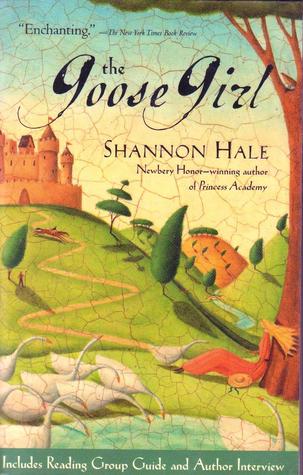
The Goose Girl, by Shannon Hale

Rating: 4 out of 5

Ani, the crown princess, can whisper to horses and birds, but when it comes to speaking to her future subjects and living up to her mother’s expectations, she may as well be mute. Convinced that Ani could never rule her people, her mother ships her off to a neighboring kingdom as a bride, only Ani’s guard’s mount a mutiny led by her lady-in-waiting, Selia, to replace Ani with Selia. Barely escaping, Ani disguises herself as a goose girl, finds a position in the palace, and strives to overcome her insecurities and learn how to lead her people. But will it be enough to earn back her rightful place as princess?

The Goose Girl weaves together a wonderful fairy tale in a style reminiscent of Diana Wynne Jones. Based on the Brothers Grimm fairy tale by the same title, Hale reinvents this classic and adds an almost believable spin on this fantasy story. Ani, the princess who’s identity is stolen by Selia, her lady-in-waiting, is likable. You want her to succeed.The plot is intricate without become overwhelming in it’s complexity and there are enough twists and turns to keep you interested. If you are looking for a fun fantasy tale to get lost in for a couple days, the Goose Girl is a great option.

My one complaint is that the villains are a bit more two-dimensional than some other books I’ve read recently. Of course, this does keep with the style of an old-school fairy tale and the book is meant for a middle-grade audience. Middle-grade villains are often missing the complex motivation you are more like to find in young adult books. That being said, Selia is dealing with issues of wanting more from her lot in life and feelings of entitlement, very real feelings and realistic motivation for her actions beyond the standard villains are evil. When you couple this with Ani’s failings and her attempts to find her strengths and use them to her advantage, you find engaging characters with issues that are sure to speak to most readers.

The Goose Girl ends as any stand-alone book should, with a satisfying conclusion, only this isn’t the end of Ani and her friends’ adventures because the book is actually part of a series called The Books of Bayern. I think this is another one of the book’s strengths. You can feel satisfied if you only have time to read the first book, but if you find yourself thinking about it days or weeks later, you can find more of the wonderful world Hale has created by moving on to the second book, Enna Burning.


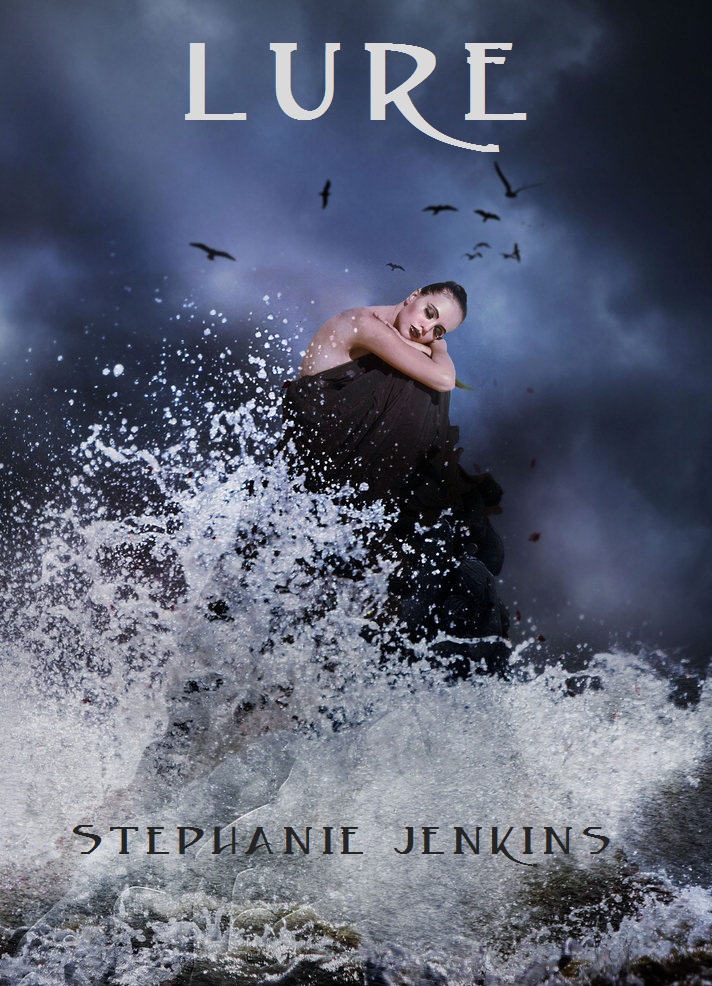
Lure, by Stephanie Jenkins

Rating: 5 out of 5

(summary taken in part from GoodReads) Charlotte Brewer is sure she’s crazy when she hears singing drifting from the ocean-normal people don’t have arias playing on repeat in their head. When she gets wasted at a party and investigates the ethereal tune, she almost drowns. Charlotte comes to with an overwhelming thirst for salt water, an inability to get injured, and a heartbeat of only seven beats a minute. She also keeps waking up by the sea with no memory of getting there and dead men wash up hours later.

As Charlotte attempts to adjust to the changes, while also trying to cope with the loss of her mother and her growing infatuation with a boy she knows is all wrong for her, she meets Lorelei, a siren. Lorelei reveals she saved her from drowning with the “Siren’s Kiss” which turned Charlotte into a siren. Her role as a siren is simple: guide the souls of the dead at sea. Of course, nothing is ever as simple as it sounds, and Charlotte soon learns that there are is a Godess that is not too happy with the existence of sirens and is willing to stop at nothing to wipe out their kind. Can Charlotte break the siren’s curse in time to save her soul?

First, I want to thank Annie Elfresh, blogger of Reading, Writing, and Waiting, for introducing me to this book and providing me with a free copy. If you haven’t visited her blog, you should. She provides some great book reviews/reading suggestions. Plus her blog has a really fun design.

It took a few pages for me to get into this book because I’m not usually into main characters like Charlotte – snarky and into wild parties – but as I got to know Charlotte, I realized there was depth to her. Plus, as a New England resident, I saw that her salty demenour (no pun intended) matched that of several New England girls I know.

When I started reading this book, I didn’t know much about it – just that it was an urban fantasy. And I’ve got to say, knowing little made it an exciting, unexpected read. There were some nice twists and there was a refreshing originality to the plot. Despite my initial reservations regarding Charlotte, I could not put the book down. Jenkins weaves an engaging tale and I wanted to see how it would end.

There are two potential love interests in the book – one the dark-haired Matt, the other blond, Golden Boy Wyatt. While we see this juxtaposition in many YA books, the love interests in Lure do not feel stale. Each brings something new to the table (and something swoon worthy). There were times when I wanted each of them to come out on top, which I think is a key ingredient for a successful literary love triangle.

Even though we are all familiar with stories that mixed ancient Gods with modern day life thanks to the Percy Jackson books, this book is so different from that series that there is really no comparison. It comes closer to Cassandra Clare’s Mortal Instruments series thought the love story part reminded me a bit of Stephanie Perkins’ Anna and the French Kiss. If you loved the Mortal Instrument series and are looking for something along those lines, if you enjoyed Anna and the French Kiss but are looking for a gateway book into urban fantasy, or if you are tired of books about vampires and werewolves but love paranormal, this just might be the next book for you. And the best thing about this book – you will be supporting a self-published author.

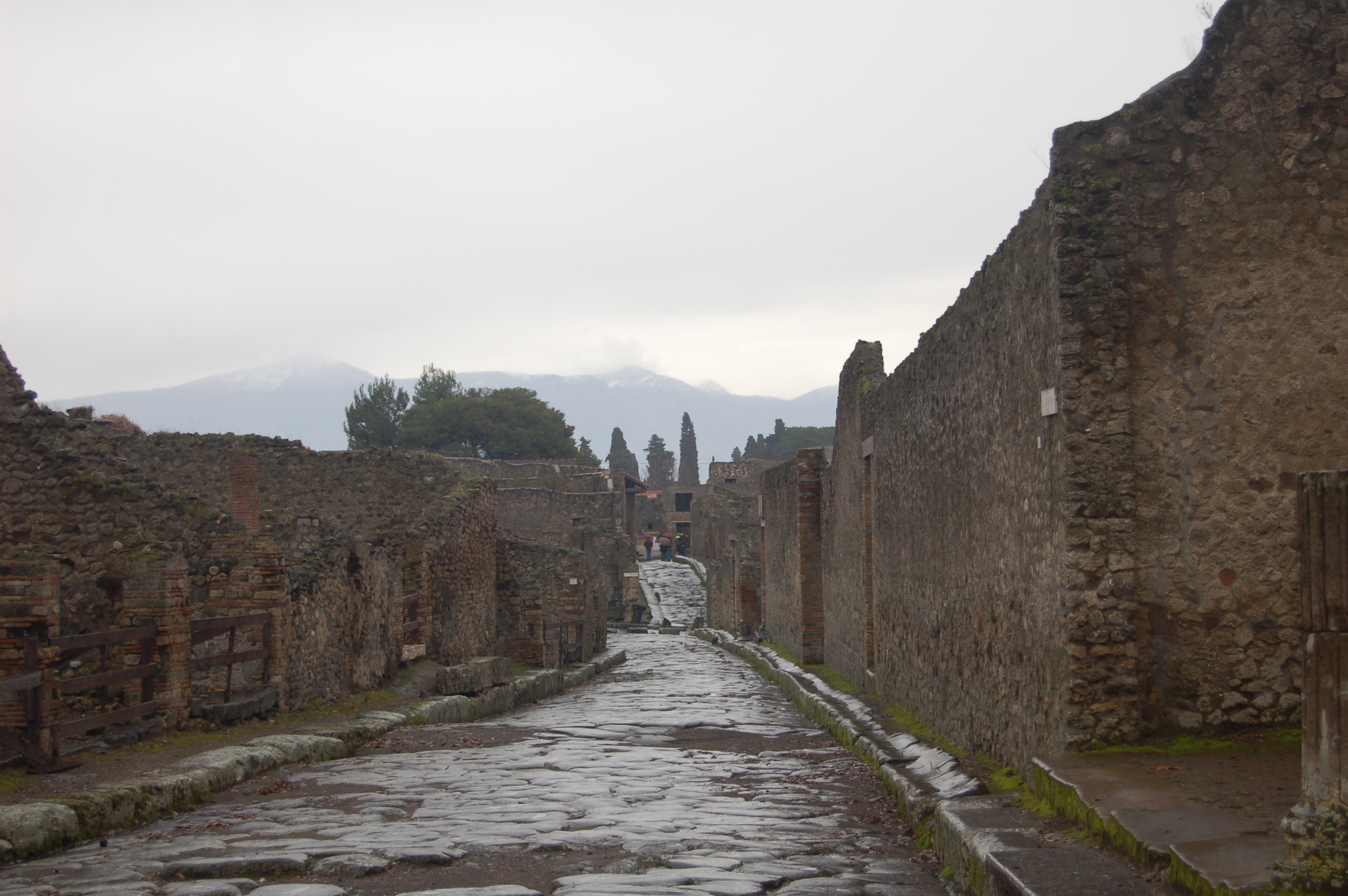
Don't you feel inspired just looking at this photo?

It’s been over 2 months since I returned from my trip to Italy, but since I’ve been looking at description in writing, I figured it was high time I went back to that trip and shared what I learned.

Do real life experiences breed better description?

If you recall, one of the reasons I was so eager for my trip to Italy was to scope out Pompeii for a possible book idea. While there, I discovered a lot more than what I set out to discover.

Originally I was only interested in Pompeii. I wanted to check out the site, get some impressions of what it is like coming up to it, how well preserved it is, that sort of thing. I wanted to feel what my MC would feel as he arrived at the site. Little did I know I would come back with a lot more ideas, and none of them related to the story I set out to research.

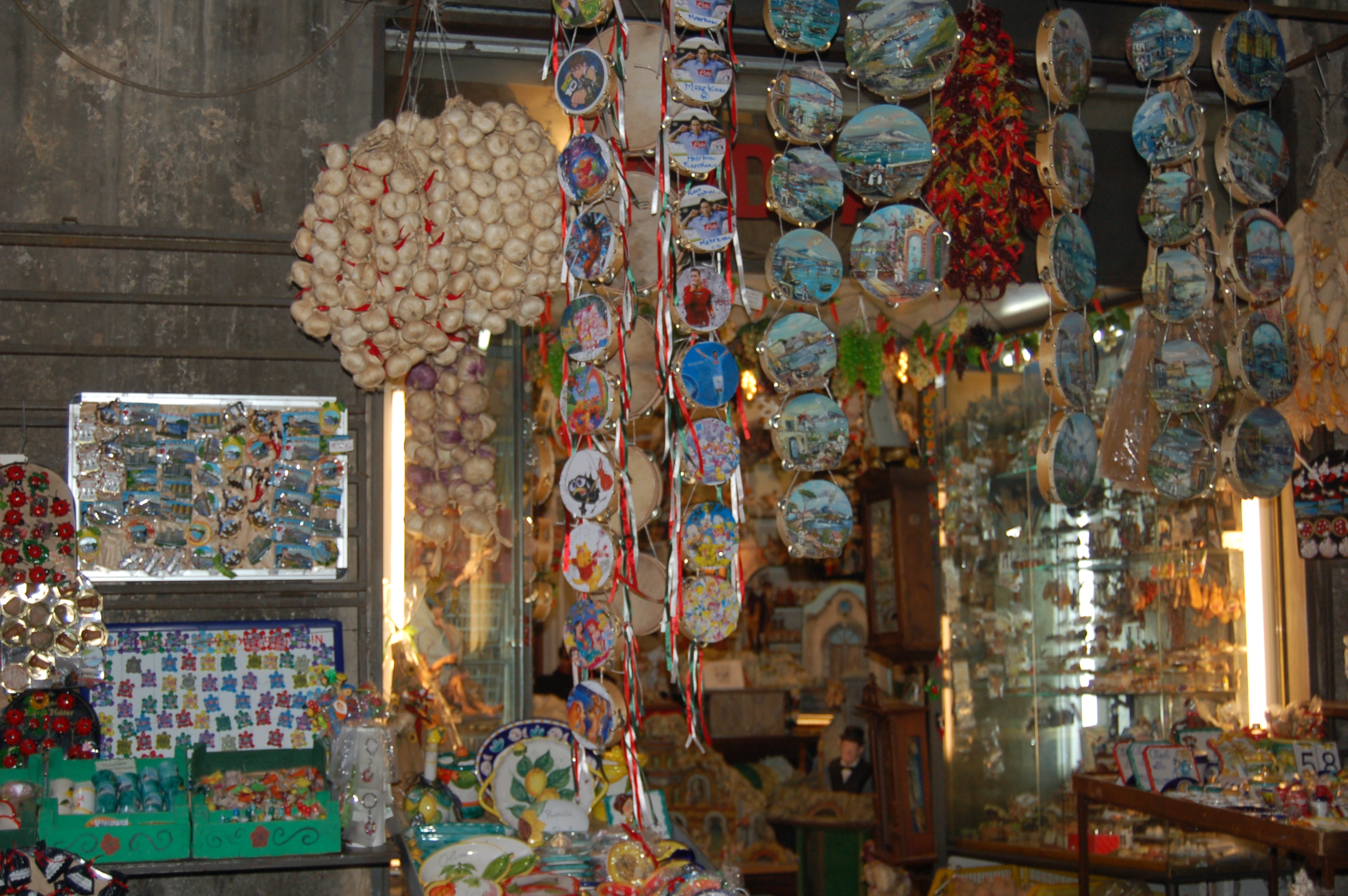
Naples, surprisingly enough, provided more inspiration than Pompeii. Naples is a medieval town, despite it being 2011. There are still narrow cobble-stoned streets, twisting alleyways, and the best part of it, it hasn’t been modernized the way Rome or Munich or other large European towns have. Because of this, I felt like I was being catapulted back in time.


Relying on all of the senses to open your mind to inspiration

The sights, smells, and even sounds all called to me, filling my senses and giving me some great ideas for descriptions -ideas that I could never have honed in on that well without first-hand experience. Things like the way the street lights reflected off of cobblestones after a day of rain, or the sound of rain hitting those cobblestones, or the energy of a small cafe in the late afternoon, or the adrenaline rush as a car comes racing towards you down a narrow alleyway, searching for a place to move to avoid being hit, and being terrified that the car will smack into the walls closing in on it from every angle. Even the feeling of being surrounded by these high walls with little room for escape provided inspiration.

Inspiration is every where, if you know how to look for it

Part of why the environment affected me so much may have been because I set out to be affected. I kept my mind open, I absorbed everything like a sponge. I wanted to remember the sensations and, as a result, I got some really good material for a future book.

Of course, you don’t have to travel all the way to Italy to get inspiration. There is inspiration everywhere. Walk outside and observe what you see, pretending like you are a stranger to the area. Look at things from an outsider’s point-of-view and you just might be surprised by all the things you pick up on, all the new sensations you become aware of.

Do you rely on real-life for inspiration? How do you turn on your senses to really see, hear, smell, and feel things, even things you are very familiar with?

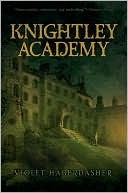
Knightley Academy, by Violet Haberdasher

Rating: 4 out of 5

Henry was just a servant boy, until a twist of fate allowed him to sit an exam that would earn him a spot at Kingsley Academy for knights-in-training and the title of the first commoner to be admitted to the elite academy. When Henry arrives at the school, he quickly learns that making his way to classes and finishing his school work is the least of his worries. Someone wants Henry out of the school, and they are willing to stop at nothing to get rid of him, including attempted murder. While trying to hunt down and stop his saboteurs, Henry stumbles upon a plot for war and realizes that things are bigger than just him, and that more than his possible expulsion is at stake.

I picked up this book because I saw a comparison of it to Harry Potter. Being a huge Harry Potter fan, I decided to give it a shot. And I’m happy I did.

Like Harry Potter, Henry Grim is an orphan. And like Harry, Henry learns that he is going to a special school. Only, Henry does not have magical skills. He merely is a very smart boy. And the school is not a school of witch craft and wizardry. It is a school for future knights.

Although Knightley Academy lacks the magic element from the Harry Potter books, I think it is still magical in it’s own way.

Haberdasher has created a world based off of an alternate history. Alternate histories are always interesting because they make you think about the importance a minor change in the past could have on your current life today. They also open up a world of possibilities, much like the existence of magic opened up possibilities for the world of Harry Potter.

Despite relying on the rags to riches story as the backdrop for Knightley Academy, Haberdasher has looked at this story with fresh eyes. Henry is not instantly given a better life. He still has to fight against the odds, fight against those who don’t want him there, and he has to prove himself every day. He did not wake up to a better world. He has to work every day to make his world better. And I think this provides a good lesson for kids. We make our own luck and our own fortune.

The characters are also well developed and exhibit growth and dimension. Even Valmont, the bully of the story, grows and we learn to understand the reasons behind his behavior. He is humanized and you can’t help but like him just a little.

Although the plot follows twists that seem similar to those in Harry Potter, I still find myself surprised by the outcome of the story. The plot kept me guessing as it opened up an intriguing mystery.

If you are looking for something with a similar feel to the Harry Potter series or just looking for a fun story with a mystery underlying the plot, I recommend giving this book a read.

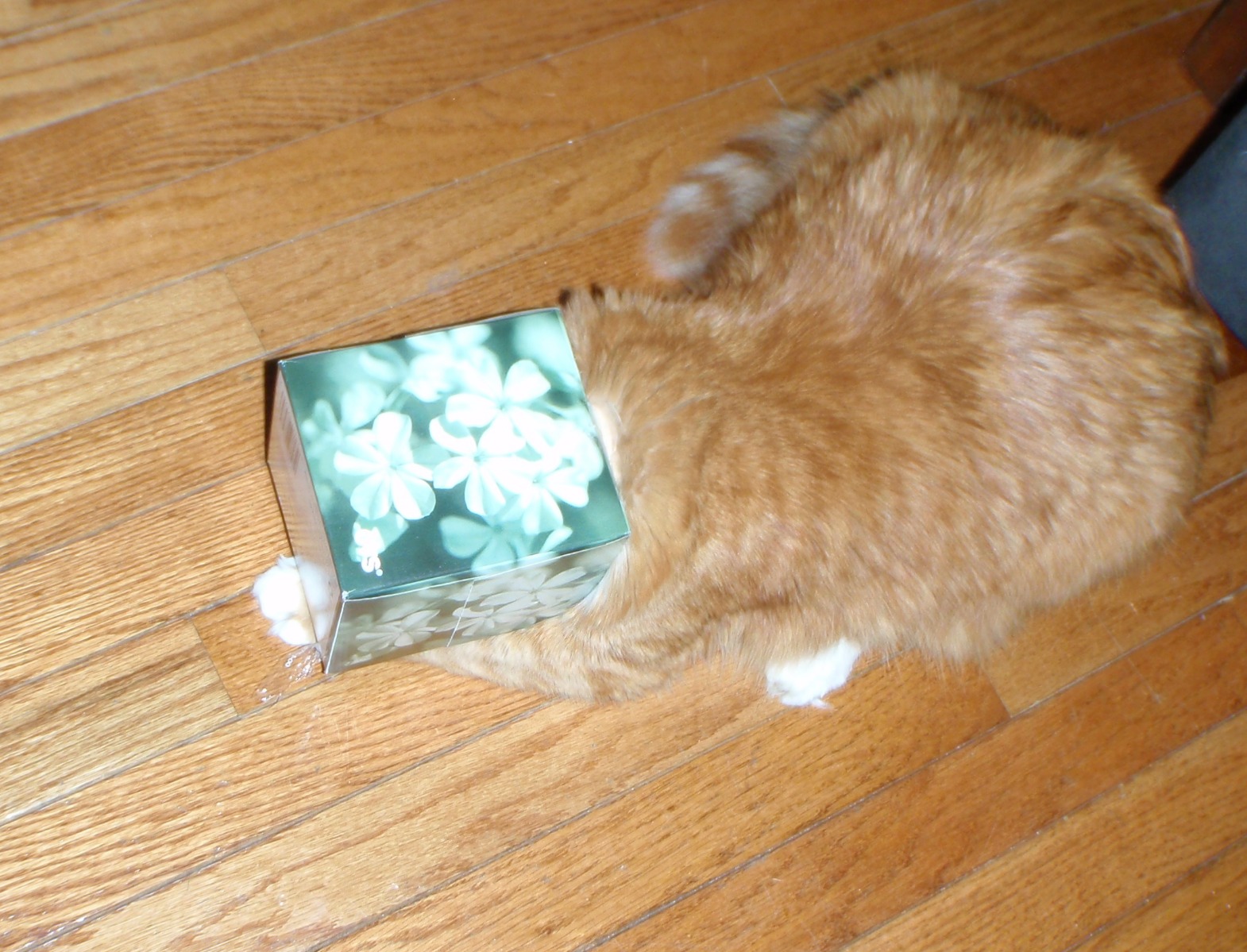
Arthur was not harmed in the capturing of this photo

I hear people talk about writer’s block all the time. I’m familiar with it. I’m sure you are familiar with it too. But as I work on my edits, I’m realizing that there is a worse block out there – editor’s block.

Writing is fun. You are creating a new world, creating new characters, making something new. Editing seems to be the antithesis to creating. Instead of making tons of new things, you are taking away from your creation. Sure, you are taking away to make it better, but it’s hard to see that while neck-deep in the editing process.

The dreaded cuts

No one wants to cut words they’ve spent countless hours writing. This is one reason why it is so important to focus on getting the story down in the first draft and waiting to fix the writing until the second, third, fourth, etc. draft. Why spend countless hours perfecting one sentence when you may end up cutting that entire scene?

Even if you aren’t cutting well-crafted prose, you may still find cuts difficult. And this is where I’m at in the process. I am making cuts to scenes I felt attached to when I wrote them but now I see that they don’t fit in with the natural flow of my story. When you are in the midst of writing, things seem like they fit. But the writing process takes longer than the reading process; you are likely to forget details  or even characters, leaving loose ends and contradictions. In rereading your story, you might realize, like I did, that the plot starts to deviate from the original plan. Some deviation may be good – it can mean that the story does not naturally flow the way you originally planned. But with deviation comes reworking of the plot, and with reworking comes cuts, including character cuts in some instances.

Splicing and dicing

A coworker of mine was recently in a television show. When it aired, she was shocked to see that several sentences were spliced and edited into one sentence. Unless you had been there during her interview, you would never have been able to guess where and how the cuts/edits were made. Well, guess what? Sometimes you have to do the same thing with your writing. And this is where things get really scary. I can deal with making cuts here and there, but when you start moving around large chunks of text, cutting some things, inserting half of a scene from chapter 12 into a part of a scene from chapter 2 and another part from chapter 7, the editing process can seem daunting and a bit frightening. I think this more than the cuts is where my editing block really stems from. Once you start changing the structure, you are really committing to the edits. You are committing to the changes in the story. And you are committing to the new plan you devised for the plot.

Overcoming editor’s block

Of course, editing doesn’t have to be scary. Here are two tricks to get you through the process:

  • Save every version – I have drafts 1.1 and 1.2 as well as 2.1 and I just started 2.2. Whenever I make any big changes, I save a new draft. This way if I change my mind, I can go back to a previous draft. This may seem like commitment phobia, but I see it as smart. You never know when you might decide that a scene or character or setting actually does work. Each rewrite changes the story, and something that didn’t work in one draft could end up working perfectly in a future draft.
  • Just dive in – Obvious, right? But this takes a lot of guts. You know what though? So does being a writer. And sadly, part of writing is editing, so if you are serious about your dream, then you have to take the plunge. You just may end up loving the end result. Need a little motivation? Check out this post by Alexis Grant on How to Find the Guts to Take a Leap.

Do you suffer from editor’s block? Do you have any tips on how to conquer it?

For more on editing, check out Andrea Mack’s blog post over at MiG Writers, Revision is All About Taking Risks.

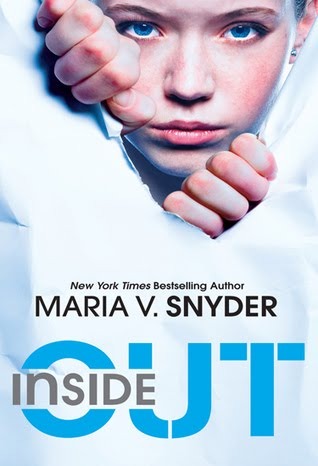
Inside Out, by Maria V. Snyder

Rating: 4.5 out of 5

(Summary from GoodReads)

Keep Your Head Down. Don’t Get Noticed. Or Else.

I’m Trella. I’m a scrub. A nobody. One of thousands who work the lower levels, keeping Inside clean for the Uppers. I’ve got one friend, do my job and try to avoid the Pop Cops. So what if I occasionally use the pipes to sneak around the Upper levels? The only neck at risk is my own…until I accidentally start a rebellion and become the go-to girl to lead a revolution.

I’m a big fan of Maria V. Snyder. I loved the Study Series and was a bit shocked when I learned about this series because the worlds are so very different. Whereas the world in the Study Series lives in the realm of fantasy books, Inside Out is more in line with sci-fi. Despite the different genres, Snyder has succeeded yet again in creating a rich world full of characters you quickly fall in love with.

The book is pretty faced-paced. I read it in one weekend. Had I not been in the middle of a move, I probably would have read it in one sitting. Right from the beginning of the book, you sense the urgency of the story as Trella wakes up to the rush of water and only just escapes the pipe she was sleeping in. And from then on, the movement of the book continues. Although the setting is more or less static – a giant metal structure with thousands of people enclosed inside – you never feel that the narration is constrained.

The world of Inside that Snyder has created is intriguing and very detailed, not that I would expect anything less from her. She manages to turn this small world into a complex system, turning something as mundane as the pipe system into a key feature of the environment.

Her characters are also complex and interesting, each with their own series of flaws, including Trella who not only has many flaws, but comes to understand them and grow as the story progresses. And laced through it all are series of betrayals, but you cannot hold them against the characters because once you understand the motivation behind their betrayals, you realize that they are only human, acting as any human would. Snyder’s ability to make her characters human is one of the things I most enjoy about her books and I think she shows growth as a writer in this area when compared to the Study series (not that the Study series was lacking in this department).

While on the subject of character, Inside Out is told in first person, and I’d say that Snyder has done an excellent job capturing the voice of Trella. I really felt I knew who she was and nothing sounded out of place. If looking for a good example of first person narration, you should definitely give this book a read.

My only complaint, a complaint I have with a lot of books, is that elements of the ending became a bit confusing. Fight scenes prove time and time again to be difficult to write. But with this being the only real weakness of the book, I’d say Maria V. Snyder has created a successful, well-written book definitely worth reading.

As a side note, Inside Out had some similarities with Across the Universe. If you enjoyed Across the Universe, you should give Inside Out a read. I promise you won’t be disappointed.